Welcome to the Mathematical World!
Severus Sebokht
Syriac Scholar and Early Promoter of Indian Numerals
Severus Sebokht (575–664 CE; born within your specified window) was a Syriac mathematician, astronomer, and bishop whose writings bridged Greek, Indian, and early Islamic mathematical traditions. Though technically slightly beyond 600 CE, his early work falls within the transmission period of interest.
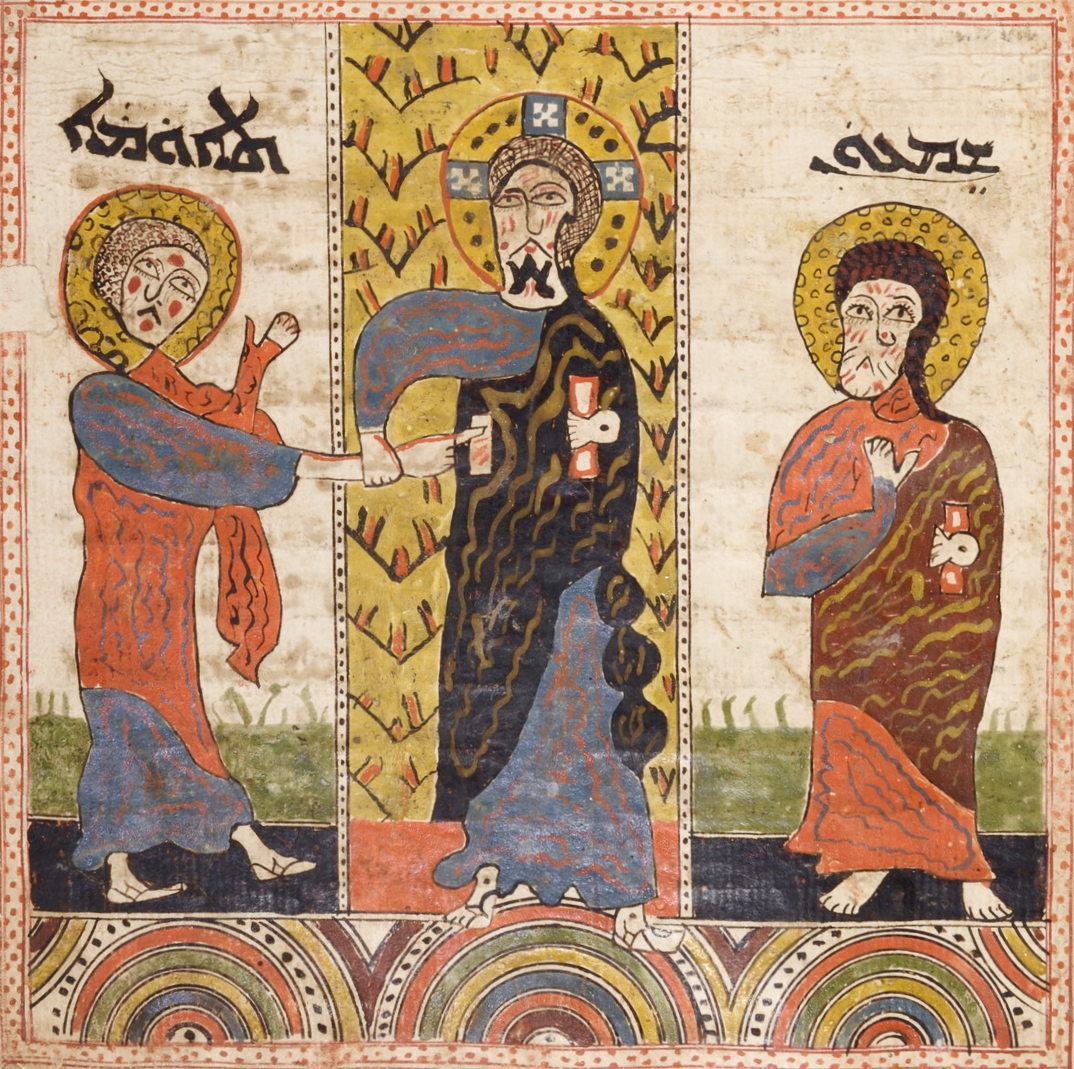
Sebokht is notable for drawing attention to Indian numerals, describing the nine digits and the use of place value, thus introducing this system to the Syriac scholarly world. He wrote on the astrolabe and astronomical calculations, applying geometric principles to the motion of celestial bodies. His commentaries preserved knowledge of Greek geometry and arithmetic while acknowledging superior computational methods from India.
He also wrote on practical and theoretical astronomy, including calendar calculations and instrument usage, ensuring that future Syriac and Arabic scholars could integrate multiple mathematical traditions. While he did not introduce new theorems, his evaluations and commentary promoted mathematical literacy and cross-cultural transmission at a critical historical juncture.
Severus Sebokht’s work exemplifies the role of the scholar as transmitter and evaluator, preserving techniques from Greek, Indian, and early Islamic traditions and facilitating the broader adoption of place-value numerals in the medieval Mediterranean world.

All rights reserved by the Mathematical Unity
Contact: +8801400044645
Email: mathematicalhorse1453@gmail.com
Our Discord Server: Mathematical Unity [Ulus Riyadiyat]